
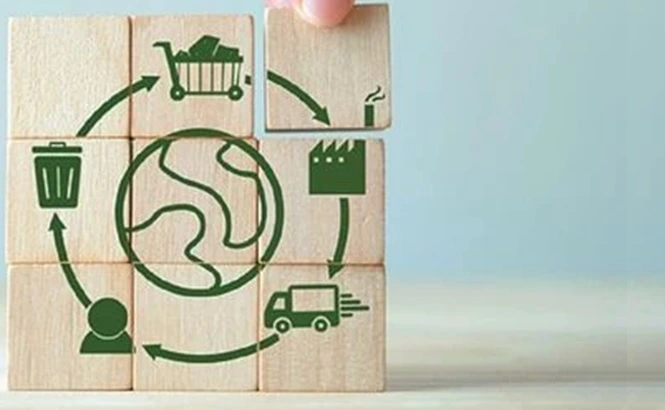
Sustainability is defined as development that meets the needs of the present without compromising the ability of future generations to meet their own needs.
Dimensions Of Sustainability – Economic, Social, Environmental.
Sustainable Business: Issues, Drivers, Trends
Key issues related to Sustainability:
- Exponential Growth Of Human Population.
- Culture Of Consumerism.
- Rising Inequalities.
- Environmental Degradation.
Culture Of Consumerism
Traditional economy follows a Linear System of Extract → Produce → Consume → Dispose.
Manufacturing is outsourced to Low-Cost countries, there’s exploitation of Human Resources, and poor Health & safety record.
There’s very Low Rates Of Recycling. Dumping in Landfills & in Water Bodies is common.
Businesses take undue advantage of Lower Environmental Regulations.
Rising Inequalities
Recipe for Social Unrest. Poor, marginalized & vulnerable communities pay the price of climate change & during natural disasters.
Other Key Issues
Natural resources are running out, most of the oil & natural gas resources are expected to be Exhausted by 2050, implementation of Paris agreement & other international agreements, digitalization.
Impacts Of Climate Change On Businesses
Climate Change can cause disruption to supply chains & operations (Eg, floods), impact availability of key raw materials, damage assets, casue insurance costs to rise, cause energy price shocks, and result in increased regulatory scrutiny. It can also cause reputational damage.
Approaches To Dealing With Climate Change
Adaptation: Activities that will address the negative physical effects of climate change. Adaptation primarily deals with location & context specific actions. Eg, cities formulating building codes to minimize impact of rising sea levels, activities that build the resilience of local communities to deal with the impact of climate change.
Mitigation: Activities that help stabilize the green house gases (ghg) to levels that are below the Tipping points. Eg, use of clean energy, renewable materials, carbon capture & storage (ccs) technology, establishing infrastructure for a low-carbon economy, producing clean Fuels from carbon-neutral sources, strengthening carbon sinks, avoiding deforestation, etc.
Drivers For Sustainability
- Regulation.
- Investor Pressure.
- Natural Resource Scarcity.
- Market Disruption Driving Complexity.
- Business Case Advantages.
Major Trends In Sustainability
Major sustainability trends are driven by increasing demand for climate action and responsible business practices from various stakeholders.
Major sustainability trends:
- Circular Economy : Investments Needed In R&D / Technology Development. Interventions Needed From Governments To Fast-Track.
- Transition To A Low-Carbon Economy : Increased Share Of Renewable Energy In New Projects. Phasing Out Of Existing Coal-Fired Power Plants Will Be Needed.
Why Business Sustainability?
Business sustainability is vital because it aligns long-term profitability with positive environmental and social impact. It’s a strategic approach that considers people, planet, and profit (the triple bottom line).Reasons for Business Sustainability:
- Innovation.
- Efficient Operations & Supply Chains.
- Tie The Business To A Larger Purpose.
- Societal License To Operate.
- Compliance.
- Investor Demand.
Benefits To Business
The various benefits to business include:
- Engaged Stakeholders.
- Improved Risk Management.
- Building A Culture Of Improvement.
- Improved Financial Performance.
- Improved Customer Loyalty.
- Attracting Talent.
Complying to changing regulatory landscape opens up possibilities for retail investors to invest in green financial products, provides motivation for companies to improve their environmental performance, provide a reference point for companies to chart out their sustainability strategies, mobilizes research & innovation for a transition to a low-carbon economy & in fostering the circular economy.
Sustainable Marketing
Sustainable marketing is the process of delivering value to Customers in a way that preserves or enhances natural & human Resources.
It is not to be confused with green marketing.
Sustainable marketing applies the concepts of sustainability to the Company’s strategy, products, branding, & communication.
Messaging / advertisements / campaigns around sustainability are usually done in longer timeframes than conventional advertising.
Sustainable marketing is important because an increasing proportion of consumers view environmental & social issues as being important in their decision-making process. Emotions affect purchasing decisions and appealing to emotions helps in the Marketing efforts.
Sustainable marketing strategies needs to have a larger purpose such ass larger social mission, placing value ahead of profit, promoting innovation.
Economic Sustainability
Economic considerations today significantly over-ride considerations of environmental protection or social equity among policy makers, industry & The general populace.
Economic sustainability is the economic aspect of sustainable development: the practice of maintaining the profitability of an organization by considering its environmental, social, and financial impact over time. It means that businesses must be able to pave their way in society and make a profit while ensuring they don’t negatively impact the environment or surrounding communities.
Economic sustainability helps protect the environment, improve the quality of life for people in the community and create jobs. It also helps boost productivity among corporations and reduce waste, thus promoting social and environmental responsibility, as well as accountability among corporations.
To achieve Economic Sustainability we must Recycle waste, Recycle energy, Reuse water, Reduce waste, Reduce consumption, Reuse materials.
Regulatory mechanisms need to be put into place to address the key issues impacting sustainability.
Increase spends on R&D / technology development so as to ensure that we stay within planetary boundaries.
Put in place policies that encourage entrepreneurship & innovation.
Dedicated initiatives to protect small industries, create social security systems, improve quality of education, prevent migration from rural areas to urban areas.
Funding Streams For Sustainability:
- There is an urgent need to increase financing for climate mitigation & adaptation.
- Public financing.
- Philanthropy.
- Marketplaces that support net-zero transition services.
- Green bonds.
17 Rooms Approach
The “17 Rooms” Approach is a collaborative method to accelerate progress on the UN Sustainable Development Goals (SDGs), using 17 themed working groups (one for each SDG). The idea is to come up with concrete, doable next steps for a better future.
It is developed by Brookings Institution & Rockefeller Foundation.
- Advances Problem Solving Across All 17 SDG’s.
- Participants / Experts From Each Community Meet In Their Separate “Rooms”, Or Working Group, One For Each SDG.
- Identifying Cooperative Actions That Can Be Undertaken Over The Next 12-18 Months.
- Emerging Ideas Are Then Shared Across The “Rooms” To Explore Opportunities For Collaboration.
- All SDG’s Get A Seat At The Table.
- Take A Next Step, Not The Perfect Step.
- Conversations, Not Presentation.
Sustainable Business Practices
Waste Minimization.
Pollution Prevention.
Green Chemistry to reduce Chemical related impacts.
Industrial Ecology – Waste of one industry is used as a raw material for another industry. Promotes a “Systems Thinking” approach.
Eco-Efficiency – encourages Life Cycle Thinking.
Life cycle thinking (LCT) seeks to identify possible improvements to goods & Services in the form of lower environmental impacts & reduced use of resources across all life stages. LCT begins with raw material extraction & conversion, then manufacture & distribution, through to use and/or consumption. It ends with reuse, recycling of materials / energy, energy recovery, & ultimate disposal. LCT is a key tool in policy making / decision making in a circular economy. Through the use of LCT, businesses can make appropriate choices at each stage of the product’s lifecycle that minimize the impact on the environment & the Community.
Design For Sustainability. DFS incorporates aspects of environmental protection & also social Aspects into the design of products & services.
Factor 4 & 10.
Factor 4 refers to a hypothetical fourfold increase in resource productivity brought about by simultaneously doubling wealth & halving resource consumption.
Factor 10 is today’s “WBCSD’s circular economy project“. It brings Companies together to reinvent how business finds, uses & disposes.
Biomimicry. It is a discipline that studies nature & imitates nature to design & address problems related to sustainability.
Extended Producer Responsibility (EPR) – It is based on the principle that the life of products & packaging post- Consumer use should be the responsibility of the product manufacturers’ & distributors.
Key Programs
Cleaner Production (CP) Program, Green Production Program,3R Forum (3R – Reduce, Reuse, Recycle), Sustainable Consumption & Production (10 YFP), SWITCH-Asia, The Lifecycle Initiative, Resource Efficiency Initiative, Green Growth, Green Economy.


BATheories.com is managed by a group of educators from Mumbai. We also manage the website AcademicsHQ.com. Our panel includes experienced professionals and lecturers with a background in management. BATheories is where we talk about the various business theories and models for BA (Business Administration) students.